
Units and Support Roles
Choose units by the job your plan needs: holding a point, covering an approach, damaging clustered hordes, or answering a crisis. Official sources name the tools but do not publish a complete stat sheet.
The direct answer
- Guards and garrisons support local defence.
- Snipers cover long approaches and visible firing lanes.
- Turrets add fixed coverage; mortars support area pressure.
- Official sources name air strikes, bombers, and gatling helicopters.
Match each tool to a battlefield role
Guards and garrisons
Use them where civilians, gates, or key streets need persistent protection.
Snipers
Place them where a long approach lets their coverage contribute before contact.
Turrets
Treat a turret as committed coverage aimed at a route you intend to defend.
Mortars
Use area-oriented support where hordes cluster, while protecting the position.
Air support
Preserve air strikes, bombers, or gatling helicopters for pressure static defences cannot absorb.
Build overlapping coverage
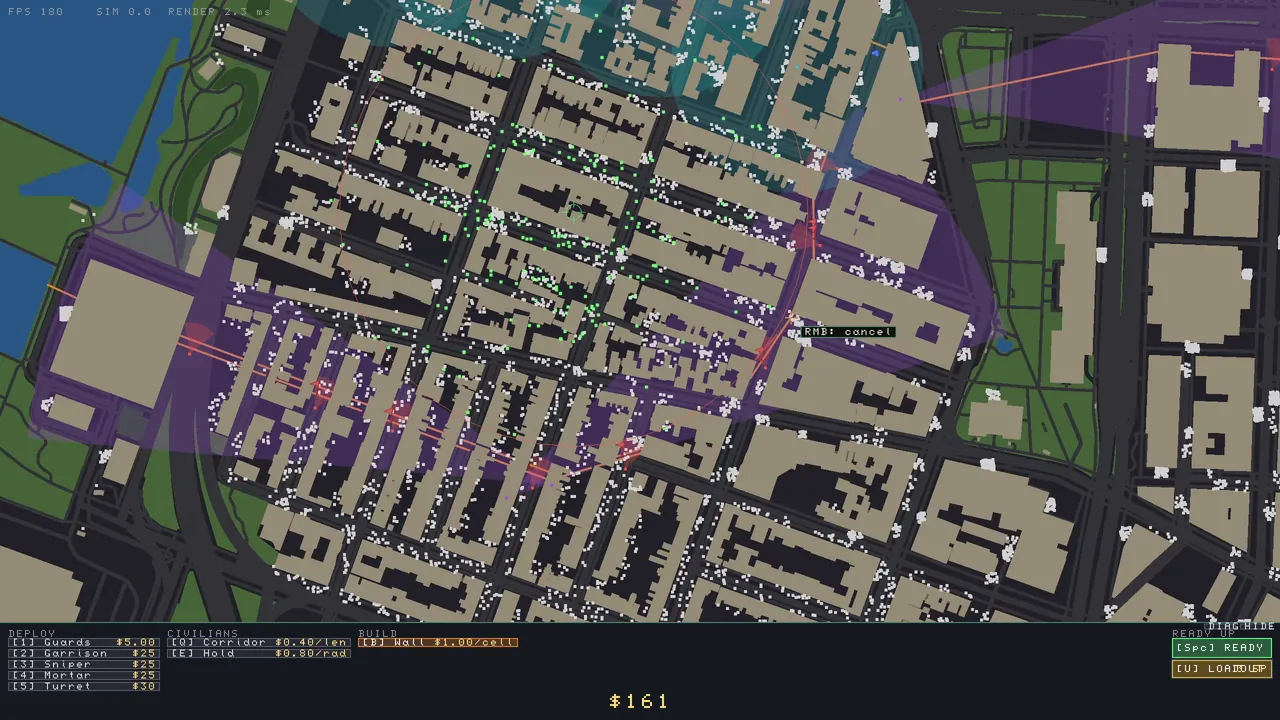
Official screenshots show cones, walls, streets, and clustered hordes across a large map. Coverage should intersect the route where the horde will spend time, not merely the location where a unit fits.
Do not turn these role descriptions into exact balance claims. Range, damage, cooldowns, costs, and upgrade effects can change and were not published in the evidence set.
A simple selection checklist
- What route or objective must this unit protect?
- When will it begin contributing against an approaching horde?
- What happens if enemies arrive from a second direction?
- Does the plan include something that delays or clusters enemies?
- Have you kept enough support to respond after the outbreak begins?
Zombies Aren't Real: S001, S002, S006 · 2026-11-15. claim IDs: C004, C005.
- cross-checked Official sources name safe zones, gates, barricades, evacuation stations, guards, snipers, turrets, and mortars.
- confirmed Official materials name air strikes, bombers, and gatling helicopters as support options.